CAN YOU DRIVE WITH A CHECK ENGINE LIGHT ON? – REAL RISKS EXPLAINED
Learn when it’s usually safe to drive with a check engine light on, when it’s not, and how to judge real risk calmly.

CAN YOU DRIVE WITH A CHECK ENGINE LIGHT ON? – REAL RISKS EXPLAINED
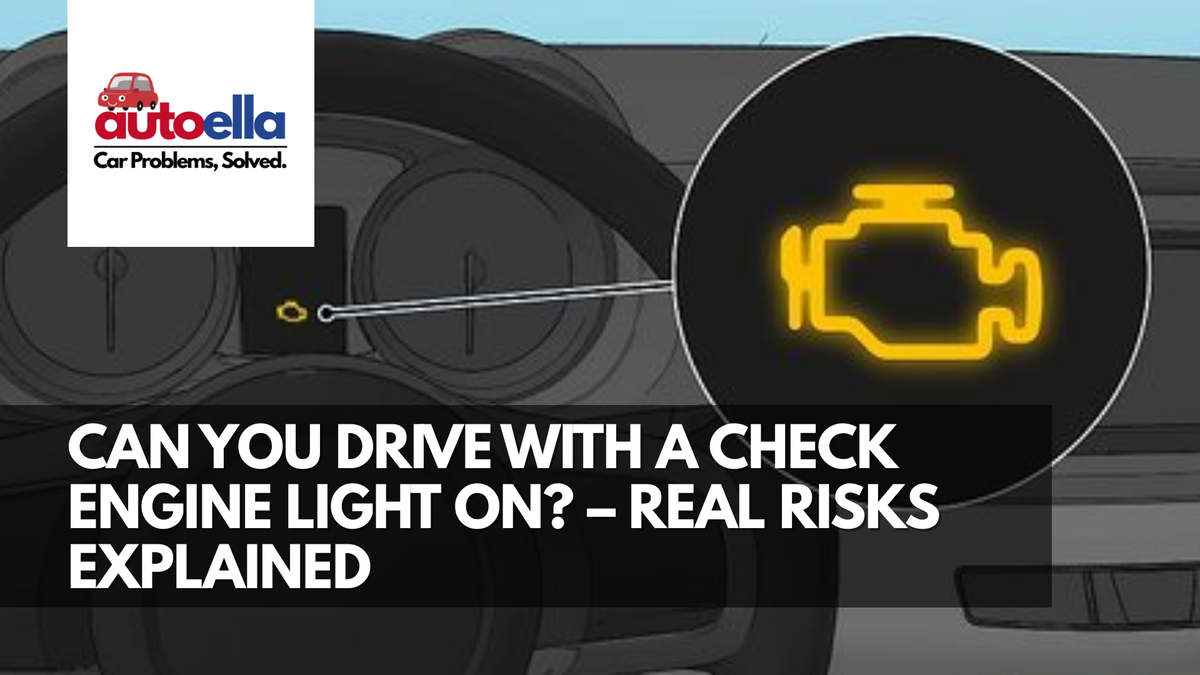
Seeing the Check Engine Light come on instantly raises one question: “Can I keep driving?” Some drivers ignore it for weeks, while others panic and pull over immediately. The truth is more balanced. In this guide, we explain when it’s usually safe to keep driving with a Check Engine Light on, when it’s not, and how to judge real risk based on how the car behaves — not fear.
📋 WHAT YOU'LL FIND IN THIS GUIDE
- 🔧 What the Check Engine Light actually means
- ⚠️ Steady vs flashing Check Engine Light
- ✅ When it’s usually safe to keep driving
- ⛔ When you should not keep driving
- 📌 What you actually risk by ignoring it
- 🧭 What to do once the light comes on
- 🔗 How this connects to other Autoella guides
- 🏁 Final thoughts
- ❓ Quick FAQ
🔧 WHAT THE CHECK ENGINE LIGHT ACTUALLY MEANS
The Check Engine Light turns on when the car’s computer detects a condition outside its expected range. That condition might affect emissions, drivability, or system monitoring — but it does not automatically mean something is about to fail.
Think of the light as the car saying: “I noticed something worth your attention.” It is a warning, not a diagnosis.
⚠️ STEADY VS FLASHING CHECK ENGINE LIGHT
The behavior of the light matters more than the light itself.
Steady Check Engine Light
- The most common situation.
- Usually indicates a stored fault that does not require immediate shutdown.
- Often related to emissions, mixture control, or mild drivability issues.
Flashing Check Engine Light
- Indicates an active condition, commonly a misfire.
- Unburned fuel may reach the catalytic converter.
- This changes the risk level and the recommended response.
The guide Check Engine Light Flashing – Most Common Causes, Risks and What to Do explains why flashing requires more caution.
✅ WHEN IT’S USUALLY SAFE TO KEEP DRIVING
In many cases, you can continue driving for a short time if all of the following are true:
- The Check Engine Light is steady, not flashing.
- The car drives normally with no strong shaking or power loss.
- There are no unusual smells, smoke, or overheating signs.
In these situations, the smart approach is to drive normally but gently, avoid hard acceleration, and plan diagnosis rather than ignore the warning indefinitely.
⛔ WHEN YOU SHOULD NOT KEEP DRIVING
There are clear situations where continued driving increases risk.
- The Check Engine Light is flashing.
- The engine is shaking heavily or misfiring under load.
- You notice a strong fuel smell, burning smell, or smoke.
- Power drops suddenly or the engine struggles to run.
In these cases, reducing load immediately and avoiding continued driving helps prevent secondary damage.
📌 WHAT YOU ACTUALLY RISK BY IGNORING IT
Ignoring a Check Engine Light does not always cause immediate failure, but it can increase risk over time depending on the underlying issue.
Increased emissions and fuel consumption
Many Check Engine Light conditions affect mixture control. Even if the car feels fine, efficiency and emissions may suffer.
Catalytic converter stress
Persistent misfires or rich conditions can overheat the catalytic converter. This is one of the most common forms of secondary damage.
Delayed diagnosis leading to bigger problems
A small issue left unaddressed can sometimes mask developing problems, making later diagnosis more complex and costly.
🧭 WHAT TO DO ONCE THE LIGHT COMES ON
The goal is informed decision-making, not panic.
1) Pay attention to how the car feels
- Is it driving normally or noticeably different?
- Do symptoms appear only under load or all the time?
2) Note the behavior of the light
- Steady or flashing?
- Did it come on suddenly or gradually?
3) Avoid heavy load until you have clarity
- No aggressive acceleration.
- Avoid lugging the engine at low RPM.
4) Read the stored code if possible
Reading the code helps with direction. The Autoella guide How to Read a Check Engine Light Code – What OBD2 Codes Really Mean explains how to interpret that information correctly.
5) Plan proper diagnosis
If the light stays on, symptoms persist, or the light flashes, professional diagnosis is the correct next step.
🔗 HOW THIS CONNECTS TO OTHER AUTOELLA GUIDES
The Check Engine Light is the starting point for many real-world symptoms. These guides expand the picture:
- What a Misfire Really Feels Like – Symptoms, Risks and What It Means
- Car Shakes When Accelerating – Common Causes, Risks and What to Check
- How to Read a Check Engine Light Code – What OBD2 Codes Really Mean
🏁 FINAL THOUGHTS
A Check Engine Light does not automatically mean “stop immediately,” and it does not mean “ignore it forever.” The right response depends on how the light behaves and how the car feels.
At Autoella, the philosophy is simple: understanding comes before diagnosing, and diagnosing comes before repairing. When you understand real risk instead of assuming the worst, you make better decisions and avoid unnecessary stress.
❓ QUICK FAQ
Can I drive for weeks with a Check Engine Light on?
Sometimes yes, but it depends on the cause. A steady light with no symptoms is different from a flashing light with rough running. Diagnosis should not be postponed indefinitely.
Does the Check Engine Light always mean something expensive?
No. Many causes are minor or moderate. Cost depends on root cause, not the warning itself.
Is it safe to drive on the highway with the light on?
If the light is steady and the car drives normally, highway driving is often acceptable. If the light flashes or symptoms appear, reduce load and avoid continued driving.