CAR MAINTENANCE SCHEDULE (US) – WHAT TO SERVICE, WHEN AND WHY IT MATTERS
Complete US car maintenance schedule: what to service, when to do it, key warning signs and realistic intervals to avoid costly repairs.

CAR MAINTENANCE SCHEDULE (US) – WHAT TO SERVICE, WHEN AND WHY IT MATTERS
A proper car maintenance schedule is the cheapest “insurance policy” you can buy for your vehicle. Oil breaks down, filters clog, fluids absorb moisture and wear items slowly degrade — and most expensive failures happen when basic maintenance is delayed for too long. In this guide we organize, in a clear and practical way, the most important maintenance items (oil, filters, fluids, brakes, tires and key wear parts), with a real workshop approach: what to do, when to do it, warning signs and what happens if you ignore it.
If you want a maintenance plan that works in the real world (commuting, heat/cold, short trips, highway driving), this is it. Use it as a baseline, then adapt intervals based on your car, mileage, driving conditions and service history.
📋 WHAT YOU'LL FIND IN THIS GUIDE
- ✅ Maintenance schedule overview (real-world approach)
- 🛢 Engine oil & oil filter: intervals and warning signs
- 🧼 Air filter & cabin filter: when to replace
- 🛞 Tires: pressure, rotation, alignment and wear patterns
- 🛑 Brakes: pads, rotors and brake fluid
- 💧 Coolant, transmission, power steering and other fluids
- 🔋 Battery and charging system: simple checks that save money
- ⚡ Spark plugs, coils and ignition maintenance
- 🧰 Belts, hoses and common “aging” failures
- 🧭 Practical checklist by mileage
- 🏁 Conclusions and final advice
✅ MAINTENANCE SCHEDULE OVERVIEW (REAL-WORLD APPROACH)
Most owners’ manuals list service intervals by miles or months (whichever comes first). That’s a good starting point, but real-world driving changes everything: short trips, hot climates, cold winters, stop-and-go traffic and towing all increase wear.
The workshop rule is simple: if you want long-term reliability, you service the basics early and consistently — especially oil, cooling system health, brake fluid condition and tires.
🛢 ENGINE OIL & OIL FILTER: INTERVALS AND WARNING SIGNS
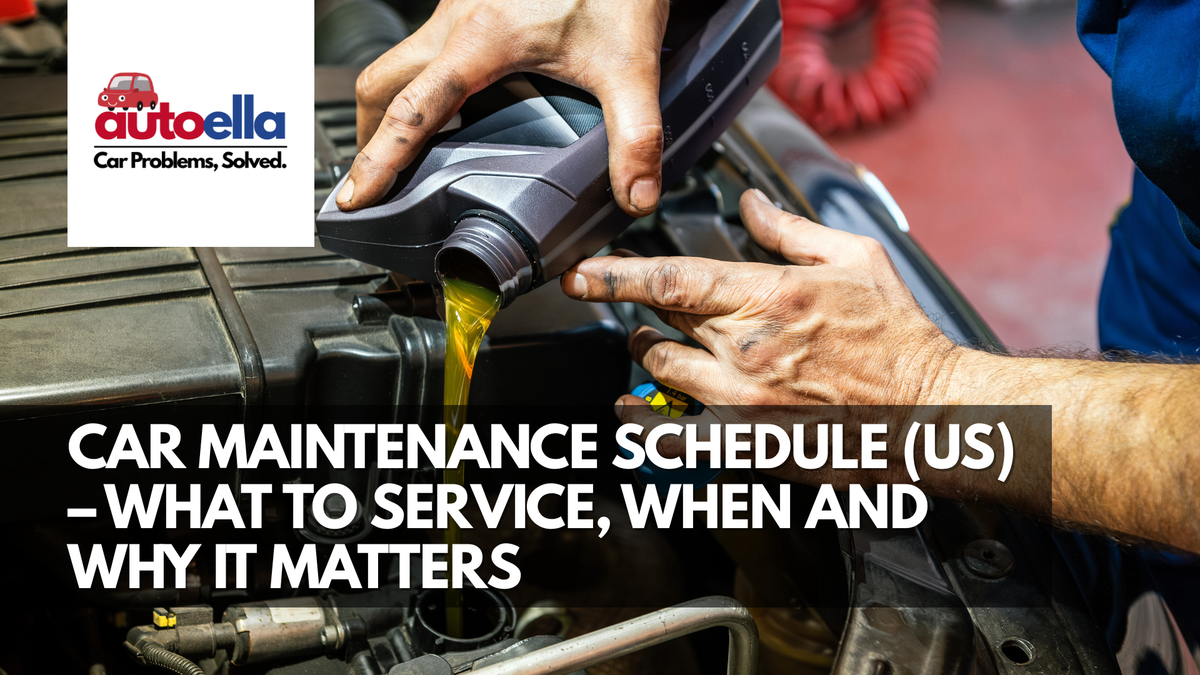
Modern engines run hotter and tighter than older designs. Oil quality and change intervals matter. Waiting too long accelerates timing chain wear (on some engines), turbo wear, sludge buildup and oil consumption issues.
Realistic intervals (US driving)
- 5,000 miles: safe interval for mixed driving, short trips, hot climates or turbo engines.
- 7,500 miles: often reasonable for mostly highway driving with the correct oil and filter.
- 10,000 miles+: only if the manufacturer specifically recommends it and your driving conditions are ideal.
Warning signs you should not ignore
- Oil level dropping between changes (possible consumption or leaks).
- Rough cold starts, new ticking noises, or turbo whining.
- Burnt smell after driving (possible oil leak onto hot components).
🧼 AIR FILTER & CABIN FILTER: WHEN TO REPLACE
Filters are cheap, but many people postpone them. A clogged air filter reduces efficiency and can worsen fuel economy, while a dirty cabin filter causes weak HVAC airflow and foggy windows.
- Engine air filter: typically every 15,000–30,000 miles (sooner in dusty areas).
- Cabin filter: typically every 12 months or 15,000 miles.
🛞 TIRES: PRESSURE, ROTATION, ALIGNMENT AND WEAR PATTERNS
Tires affect safety more than almost anything else. The two biggest mistakes are driving with incorrect tire pressure and ignoring alignment issues.
What to do
- Check tire pressure at least once a month (cold tires).
- Rotate tires every 5,000–7,500 miles (or every oil change).
- Get an alignment if you notice pulling, uneven wear or after a hard pothole hit.
Common wear patterns (quick read)
- Inside edge wear: often alignment/camber issues.
- Center wear: often overinflation.
- Both edges worn: often underinflation.
🛑 BRAKES: PADS, ROTORS AND BRAKE FLUID
Brake pads wear slowly, so people forget about them — until they hear metal-on-metal noise. The smarter move is to inspect pads and rotors periodically and keep brake fluid healthy.
Practical intervals
- Brake inspection: every oil change or every 6 months.
- Brake fluid: every 2–3 years (it absorbs moisture and loses performance).
Symptoms that require immediate attention
- Squealing or grinding noises while braking.
- Steering wheel shake during braking (possible warped rotors).
- Soft brake pedal (possible fluid issues or air in the system).
💧 COOLANT, TRANSMISSION, POWER STEERING AND OTHER FLUIDS
This is where “lifetime fluids” marketing creates expensive problems. Fluids degrade internally and lose protective additives.
Coolant
- Typical interval: 5 years / 60,000 miles (varies by manufacturer).
- Watch for: overheating, coolant loss, sweet smell, crusty residue around hoses.
Transmission fluid
- Automatic: many workshops recommend 40,000–60,000 miles depending on use.
- CVT: follow manufacturer guidance closely; fluid condition is critical.
- Manual: often 60,000–100,000 miles depending on driving style.
Power steering / differential / transfer case
- Often neglected until noise develops. Many vehicles benefit from periodic service around 60,000 miles.
🔋 BATTERY AND CHARGING SYSTEM: SIMPLE CHECKS THAT SAVE MONEY
A weak battery doesn’t just cause slow cranking — it can trigger random warning lights and module communication issues.
- Typical battery life: 3–5 years (climate dependent).
- Check: corrosion on terminals, loose connections, low resting voltage.
- If you see “weird electrical behavior”, test the battery first.
⚡ SPARK PLUGS, COILS AND IGNITION MAINTENANCE
Many misfire issues start with worn plugs. Replacing spark plugs on schedule is cheap prevention.
- Typical interval: 30,000–60,000 miles (varies by engine and plug type).
- Turbo / direct injection engines often need earlier plug service.
🧰 BELTS, HOSES AND COMMON “AGING” FAILURES
Rubber and plastic parts age with heat cycles. In real workshops, many breakdowns are caused by simple failures: a cracked belt, split hose or brittle coolant connector.
- Inspect drive belts for cracks or glazing.
- Check coolant hoses for swelling, soft spots or leaks.
- Replace aging plastic connectors proactively on known weak-point engines.
🧭 PRACTICAL CHECKLIST BY MILEAGE
Every 5,000–7,500 miles
- Oil + filter, tire pressure, quick brake check.
Every 15,000–30,000 miles
- Air filter, cabin filter, brake inspection, alignment check.
Every 40,000–60,000 miles
- Transmission service (as applicable), coolant check, spark plugs (many engines), brake fluid if due.
Every 60,000–100,000 miles
- Deeper inspection: suspension wear, engine mounts, hoses, steering components.
🏁 CONCLUSIONS AND FINAL ADVICE
A solid car maintenance schedule is not about “over-servicing” your car. It’s about doing the right things at the right time so small wear never becomes major damage.
The key items that prevent the most expensive failures are:
- Consistent oil changes with the correct oil specification.
- Cooling system health (coolant condition and leak prevention).
- Brake fluid and brake inspections for safety and longevity.
- Tires and alignment to prevent uneven wear and handling issues.
If you want the best approach: keep a simple maintenance log, fix small issues early and ask your mechanic what is likely to fail next based on mileage and known weak points of your specific engine.